
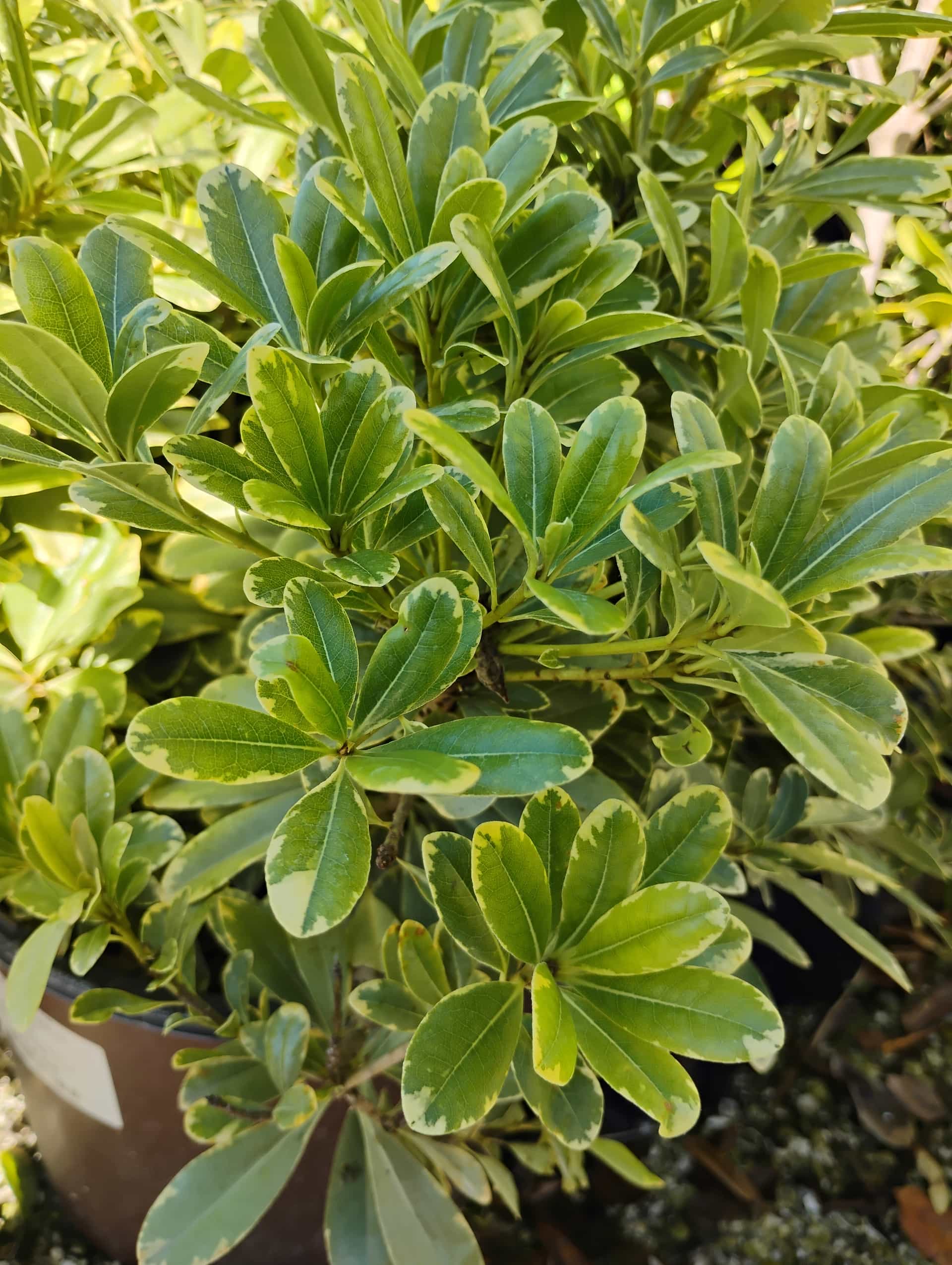
Varieties We Bring In
Ten Golf Ball · Ten Gold Coast · Ten Wrinkled Blue
Green · Variegatum
Ten Gold Coast · Ten Oliver Twist · Ten Tasman Ruffles
Green
We received some Pittosporum on Nov 4, 2026.
We bring this in seasonally, so what is on the lot changes week to week. A received date shows when it last came in, not that it is here today.
Call (904) 471-0440 to confirm this plant and size before you make the trip.
Last received Nov 4, 2026.
We bring this in seasonally, so what is on the lot changes week to week. A received date shows when it last came in, not that it is here today.
Call (904) 471-0440 to confirm this plant and size before you make the trip.
Pet toxicity: Non-toxic to dogs and cats
Pet safety guideAbout Pittosporum
Japanese pittosporum (Pittosporum tobira) is a dense, rounded evergreen shrub native to Japan, China, and Korea, with thick, glossy, dark green leaves and clusters of creamy-white flowers bearing a strong orange-blossom fragrance in spring. It is extensively used as a hedge, foundation planting, and coastal specimen due to its tolerance of salt and drought.
Plant details
- Bloom Season
- Spring
- Flower Color
- White, Cream
- Growth Rate
- Fast
- Foliage
- Evergreen
- Soil
- Sandy, Loam, Clay, Well-drained
Best planting months
Recommended months: March, April, May, September, October, November.
Seasonal care
Bloom season. Good planting window.
Active growing season.
Ideal planting window.
Retains foliage through winter.
Care essentials
Grows well in full sun to partial shade; full sun encourages more compact growth while part shade is tolerated. Avoid deep shade, which causes leggy growth and reduced flowering.
Drought-tolerant once established; water moderately during establishment. Excellent drainage is critical — pittosporum is very susceptible to root rot in poorly drained or constantly wet soils, a common failure point in Florida foundation plantings.
Adaptable to sandy, loamy, or clay soils but must be well-drained. Fertilize lightly with a slow-release balanced fertilizer in spring; avoid over-fertilizing, which encourages excessive growth and requires frequent pruning. Prune after spring flowering to maintain shape.
Similar needs

Shumard Oak
Shares 5 of the same needs: full sun, moderate water, sandy, salt tolerance, and zone 9a hardiness.
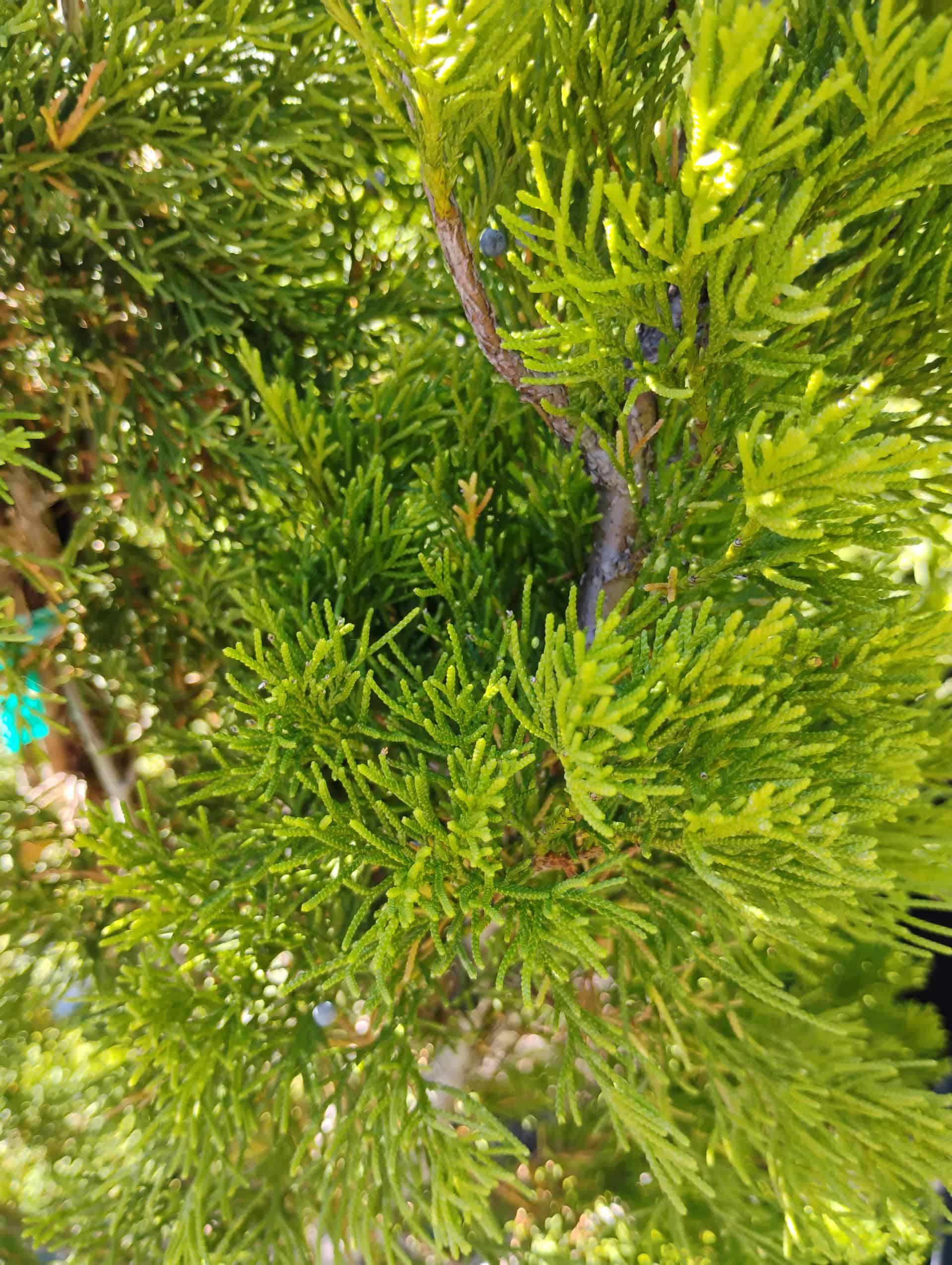
Juniper
Shares 4 of the same needs: full sun, sandy, salt tolerance, and zone 9a hardiness.

Oleander
Shares 4 of the same needs: full sun, sandy, salt tolerance, and zone 9a hardiness.
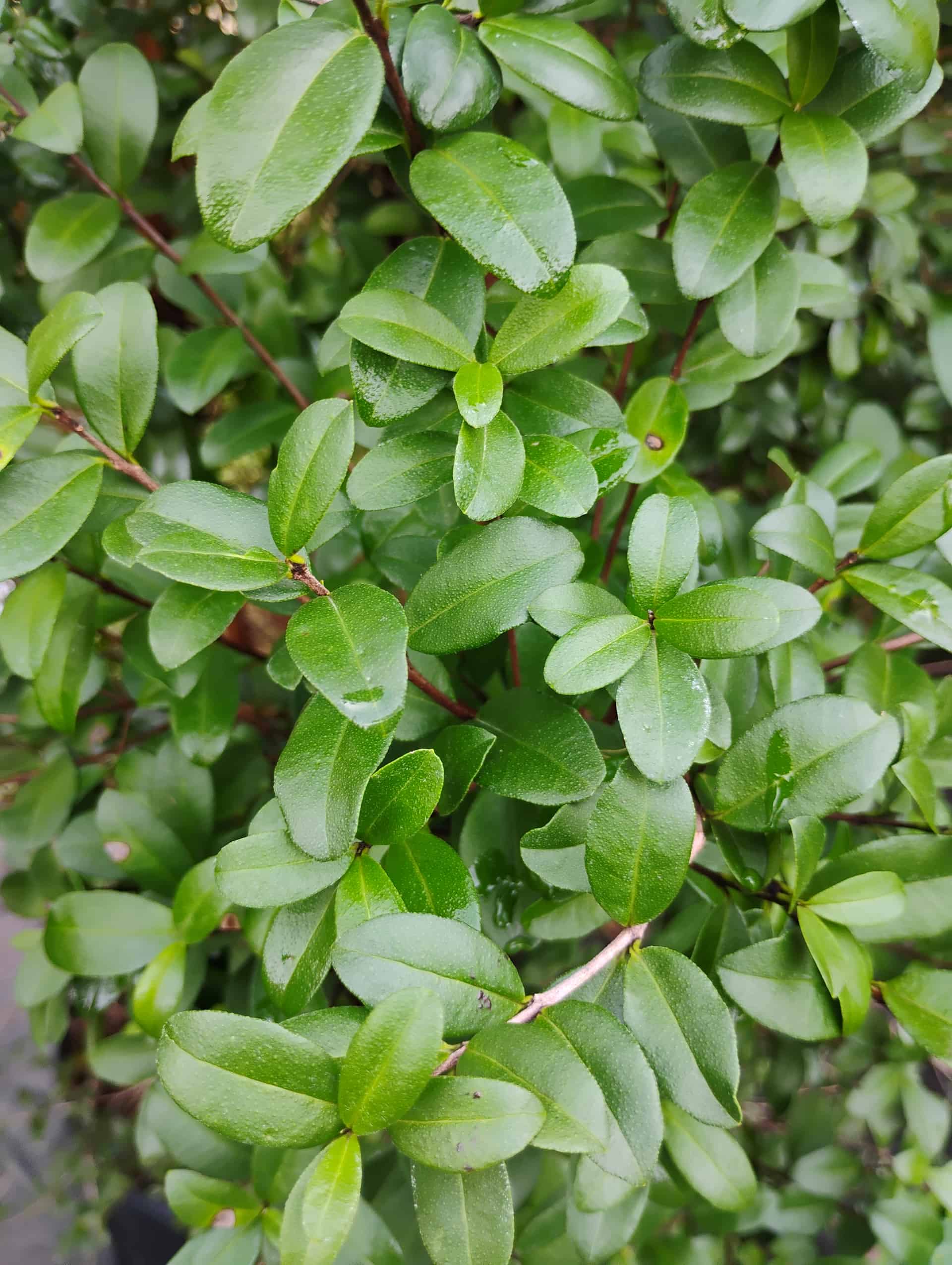
Simpson's Stopper
Shares 5 of the same needs: full sun, moderate water, sandy, salt tolerance, and zone 9a hardiness.
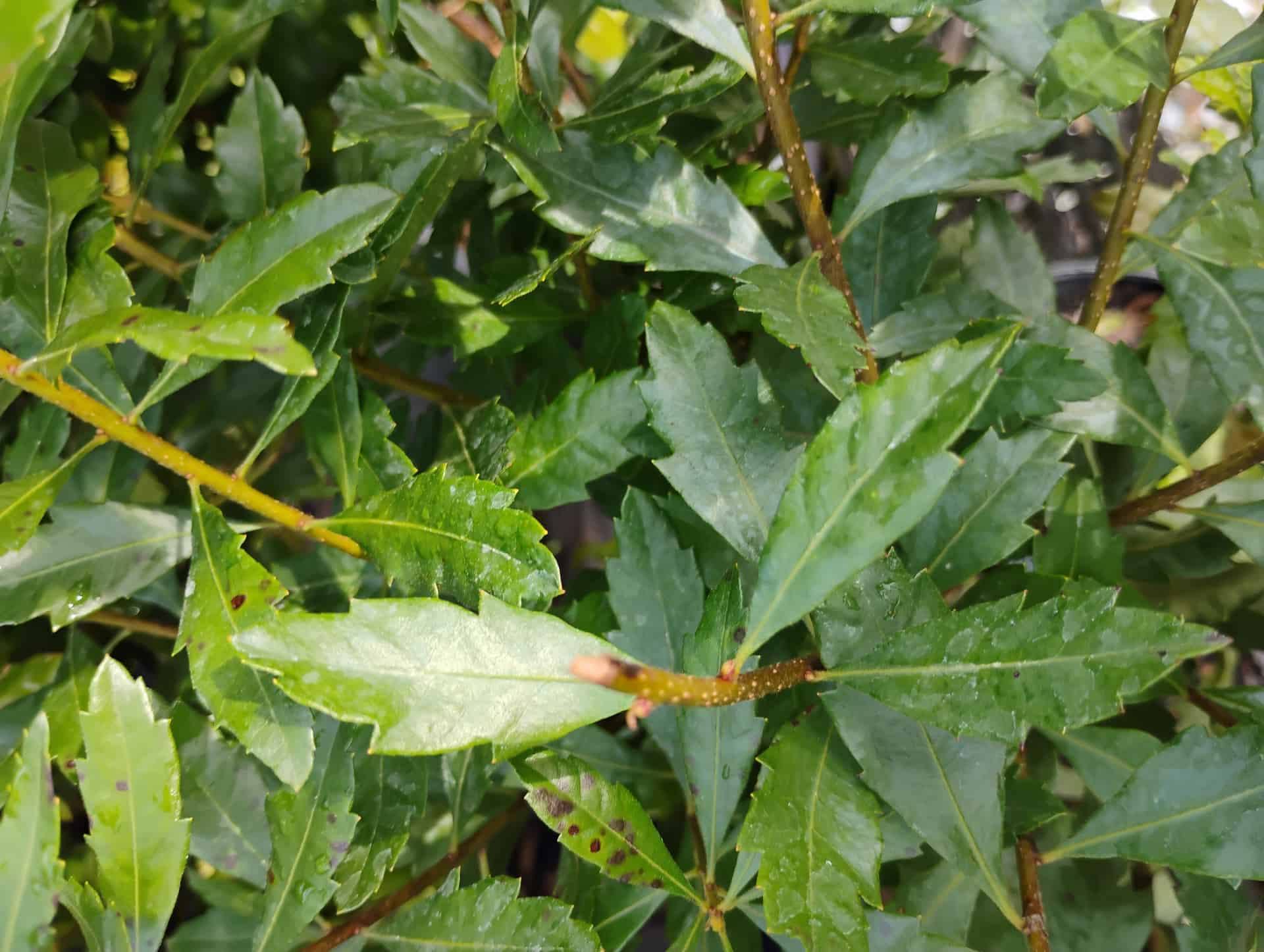
Wax Myrtle
Shares 5 of the same needs: full sun, moderate water, sandy, salt tolerance, and zone 9a hardiness.

Autograph Tree
Shares 5 of the same needs: full sun, moderate water, sandy, salt tolerance, and zone 9a hardiness.
You may also like
Common questions
Is Pittosporum a good plant for St. Augustine?
Pittosporum is a shrub. Mature size: 10-15 feet × 8-12 feet (standard); 3-4 feet (dwarf cultivars). Light: Full Sun, Part Shade. Water needs: Low to Moderate. Recorded hardiness zone: 9a. Recorded salt tolerance: high.
What is the recorded pet toxicity for Pittosporum?
Non-toxic to dogs and cats
Care information verified from
Last reviewed February 2026. Our care guidance comes from trusted horticulture sources and decades of helping St. Augustine gardeners. Conditions here can vary dramatically from one area to the next, so come ask us and we'll tailor it to your yard.