
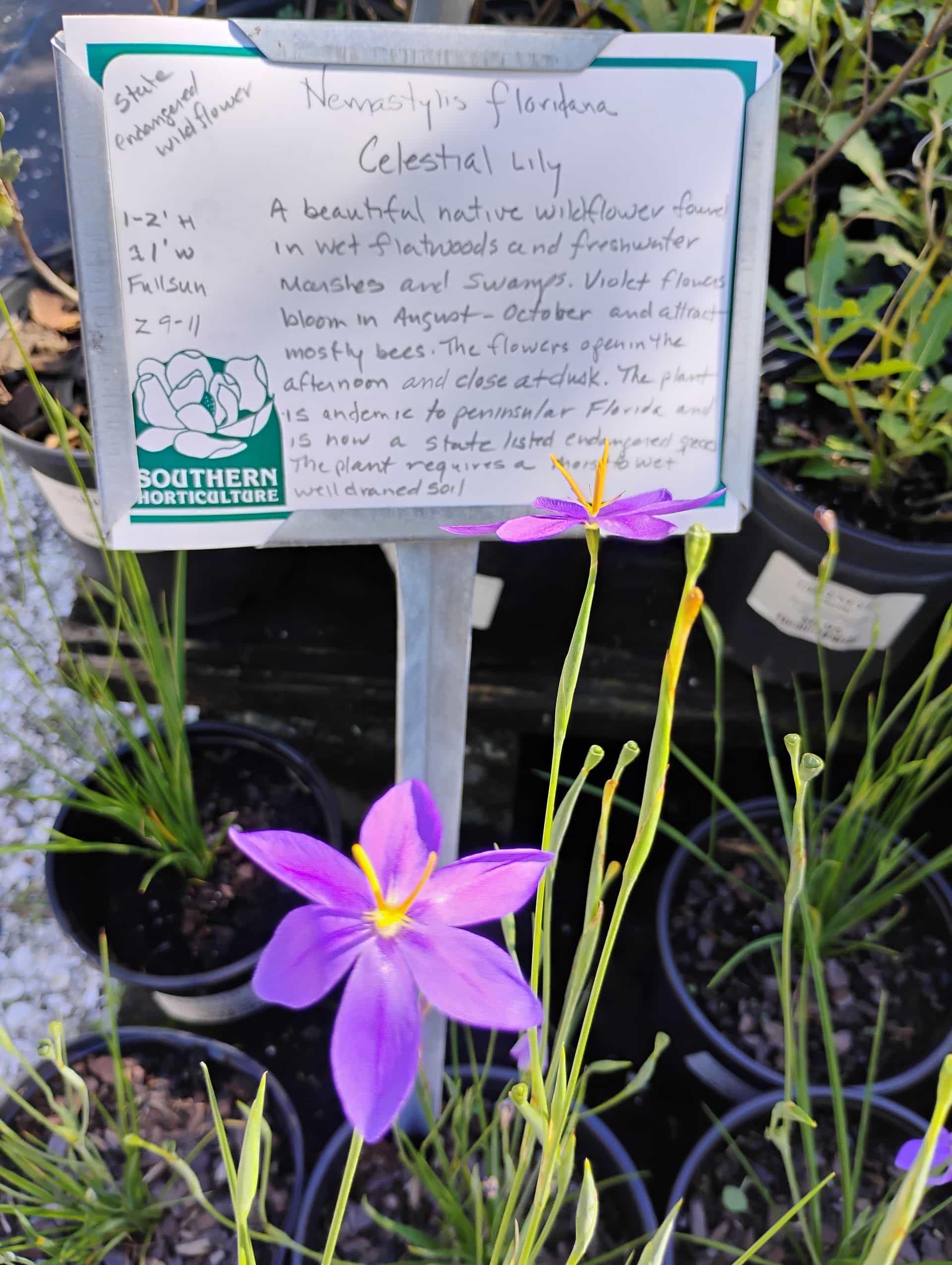
Celestial Lily
Nemastylis floridana
Varieties We Bring In
Last received Mar 9, 2026.
We bring this in seasonally, so what is on the lot changes week to week. A received date shows when it last came in, not that it is here today.
Call (904) 471-0440 to confirm this plant and size before you make the trip.
About Celestial Lily
Celestial Lily (Nemastylis floridana) is a rare Florida endemic wildflower in the iris family, producing deep blue to lavender blooms in late summer and fall that open for only a few hours each afternoon. Native to wet pinelands and marsh edges of peninsular Florida, it is a state-listed endangered species prized for conservation and native wildflower gardens. Starting at $14.95.
Plant details
- Bloom Season
- Summer, Fall
- Flower Color
- Purple, Blue
- Growth Rate
- Moderate
- Foliage
- Deciduous
- Soil
- Sandy, Loam, Well-drained, Wet
Best planting months
Seasonal care
Bloom season. New foliage emerges. Good planting window.
Higher water demand in summer heat.
Foliage may begin to change or drop. Ideal planting window.
Dormant — drops foliage.
Care essentials
Plant Celestial Lily in full sun — UF/IFAS and Florida native plant sources confirm this Florida endemic requires open, sunny conditions to bloom. Shade suppresses flowering.
Requires moist to wet soil during summer and fall, its active growing and blooming season. Plant in seasonally wet flatwoods or marsh margins; supplement irrigation during dry spells in NE Florida to maintain consistent moisture.
Plant in moist, fertile, sandy or loamy soil. Top-dress with organic compost to improve moisture retention. Minimal fertilizer needed for this Florida native; excessive nutrients can favor weedy competition over bulb establishment.
Similar needs
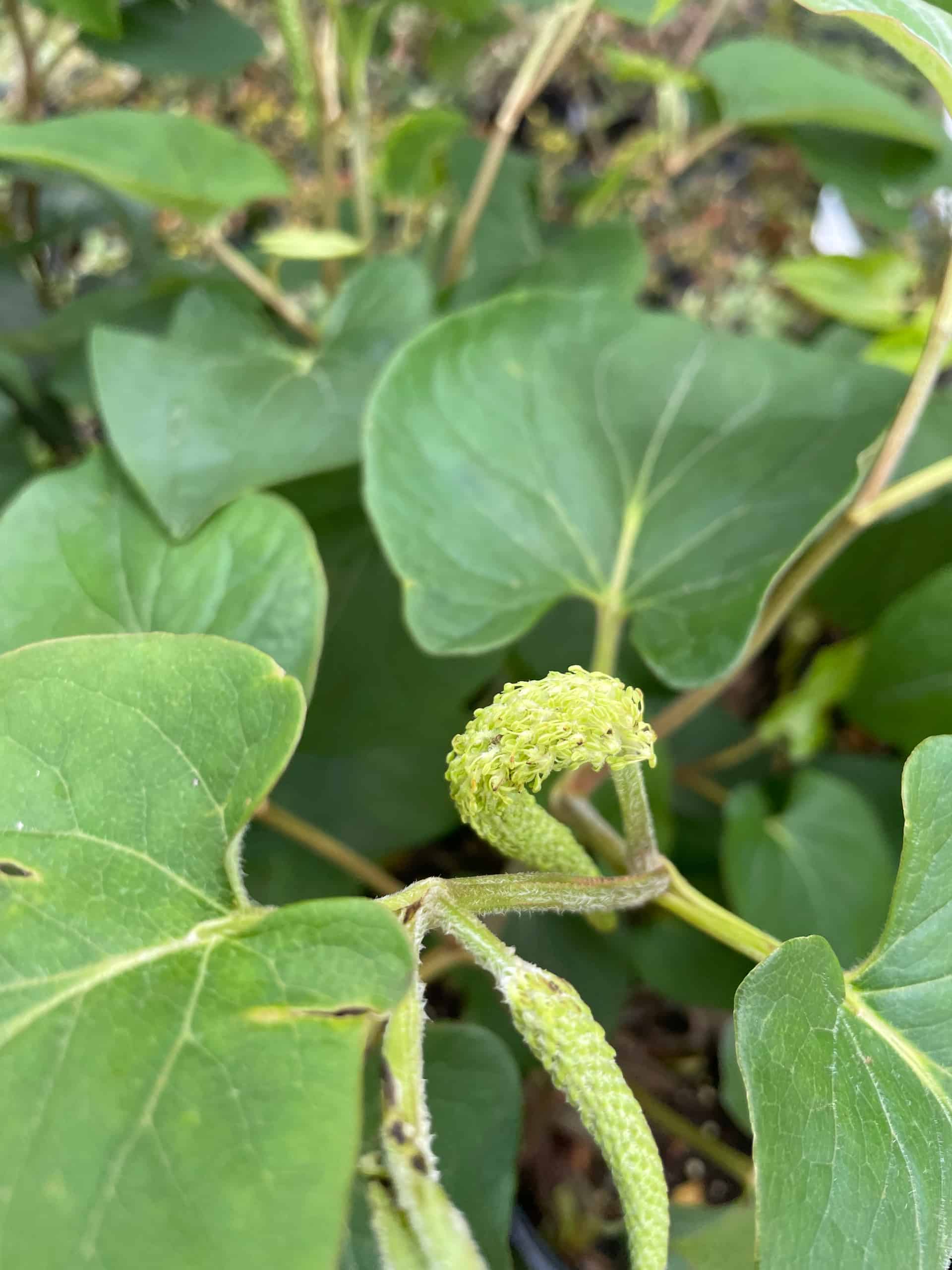
Lizard's Tail
Shares 6 of the same needs: full sun, high water, loam, salt tolerance, zone 9a hardiness, and pollinator-friendly.
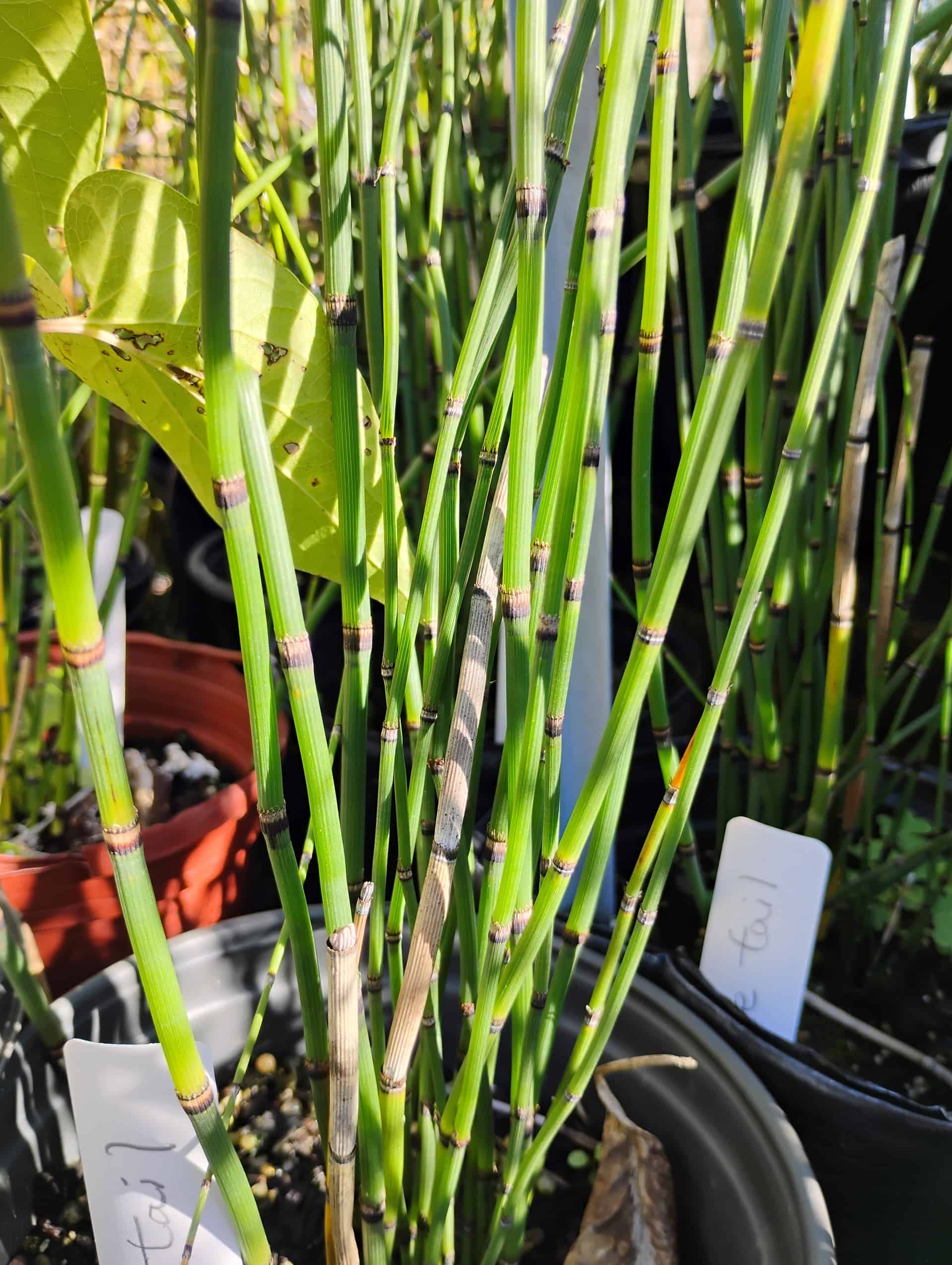
Horsetail
Shares 5 of the same needs: full sun, high water, loam, salt tolerance, and zone 9a hardiness.
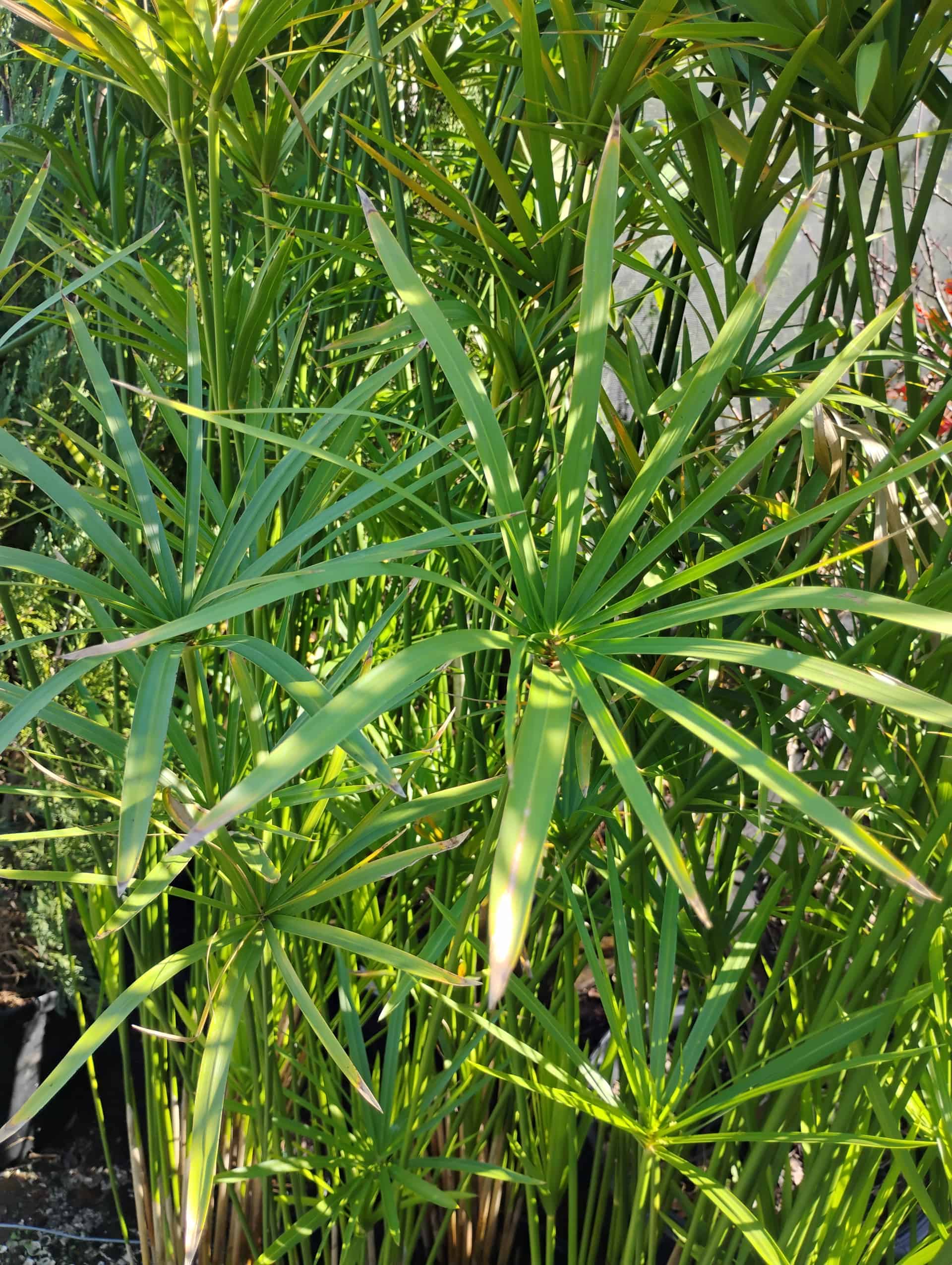
Papyrus
Shares 6 of the same needs: full sun, high water, sandy, salt tolerance, zone 9a hardiness, and pollinator-friendly.
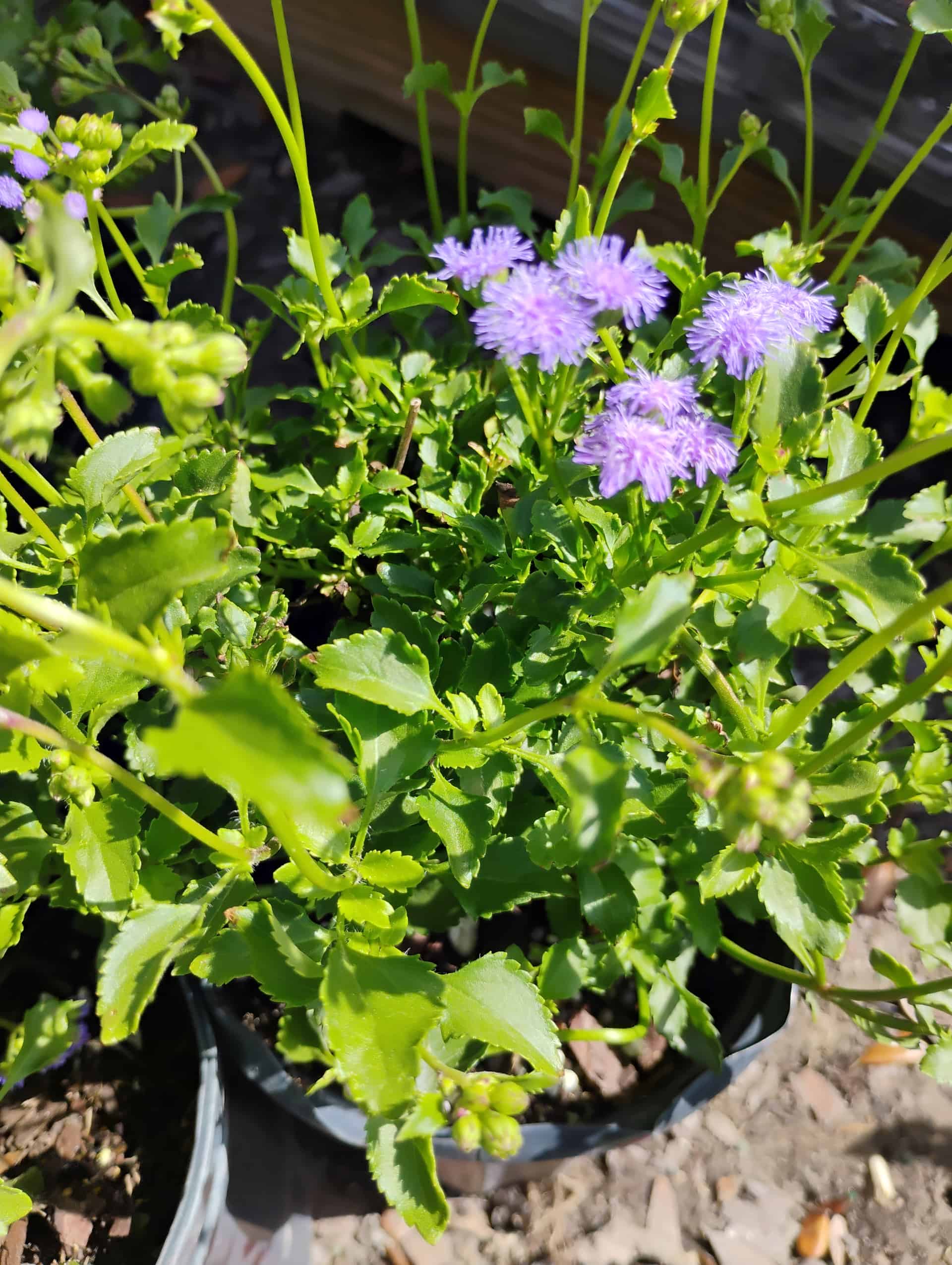
Blue Mistflower
Shares 5 of the same needs: full sun, sandy, salt tolerance, zone 9a hardiness, and pollinator-friendly.
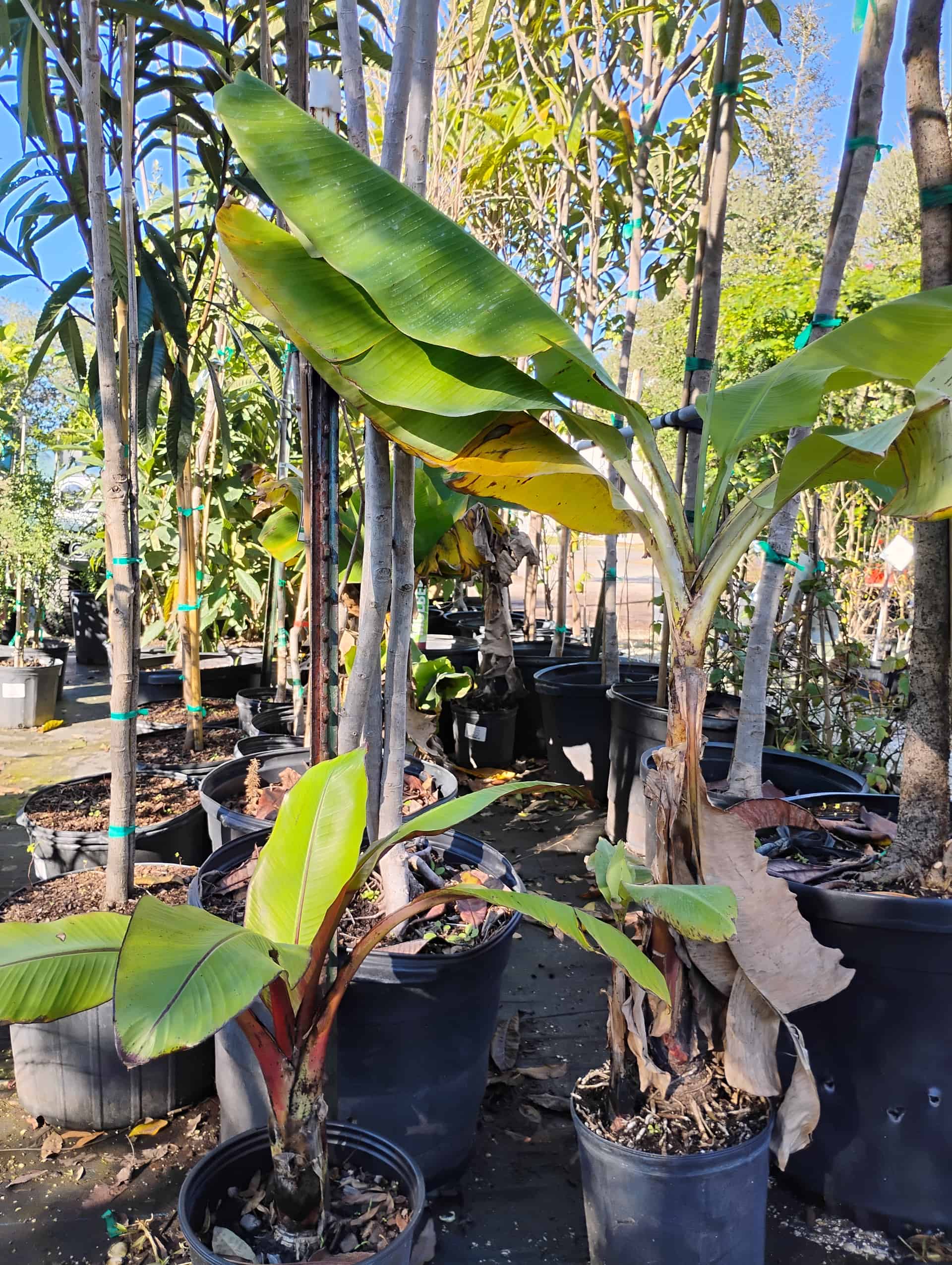
Banana
Shares 6 of the same needs: full sun, high water, sandy, salt tolerance, zone 9a hardiness, and pollinator-friendly.

Lobster Claw
Shares 6 of the same needs: full sun, high water, loam, salt tolerance, zone 9a hardiness, and pollinator-friendly.
You may also like
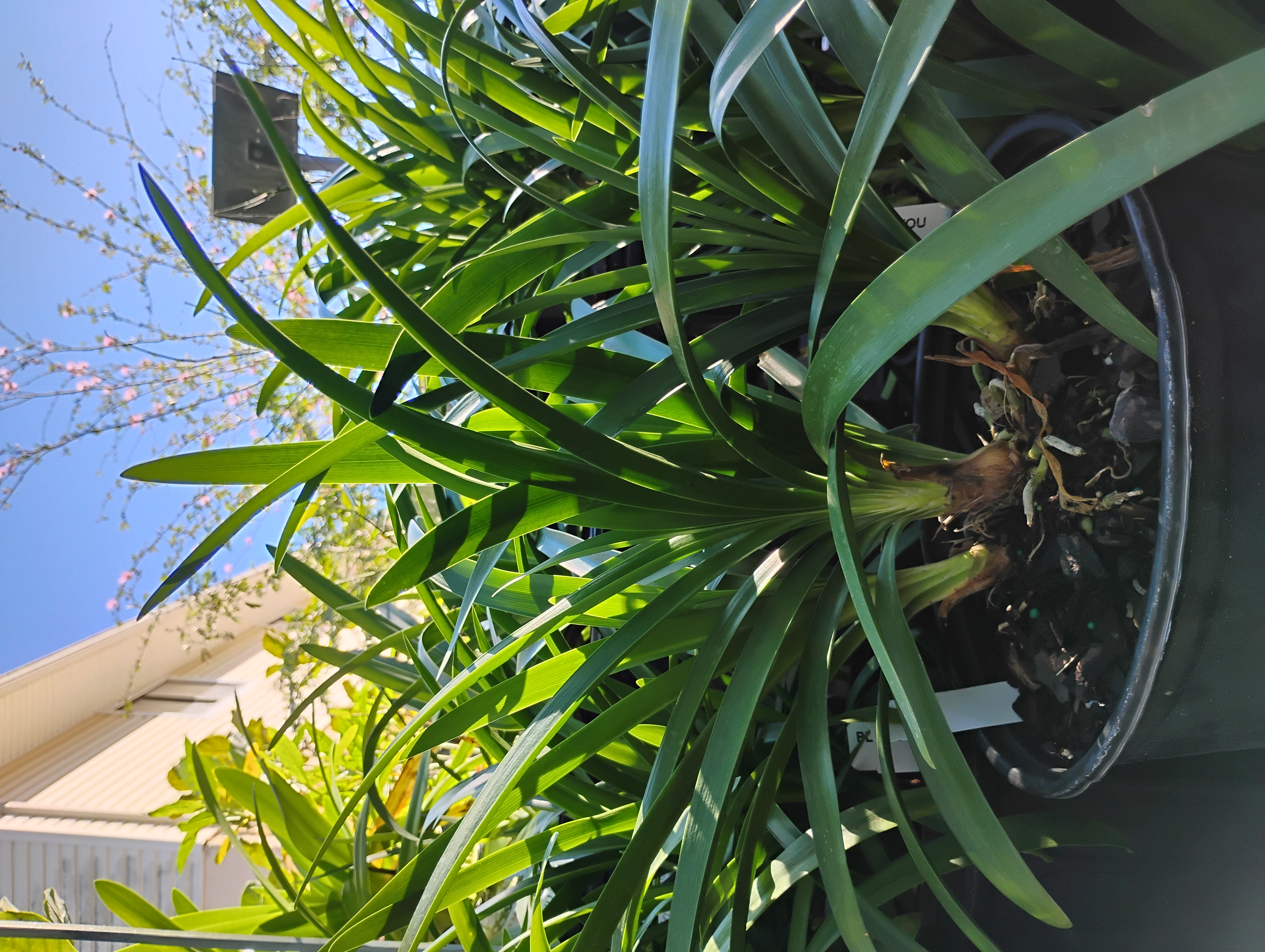 Perennial
Agapanthus
Agapanthus praecox
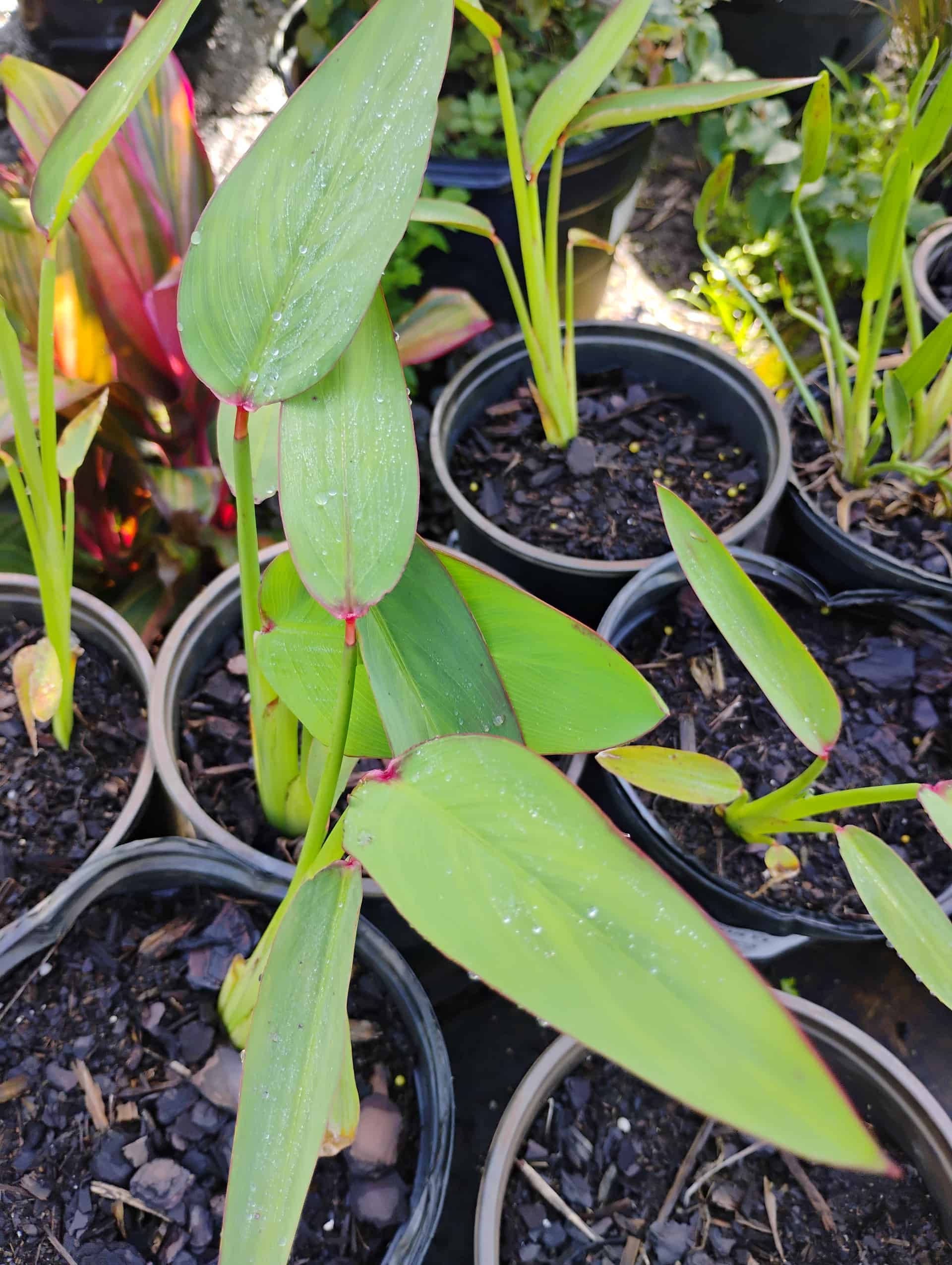 Perennial
Alligator Flag
Thalia geniculata
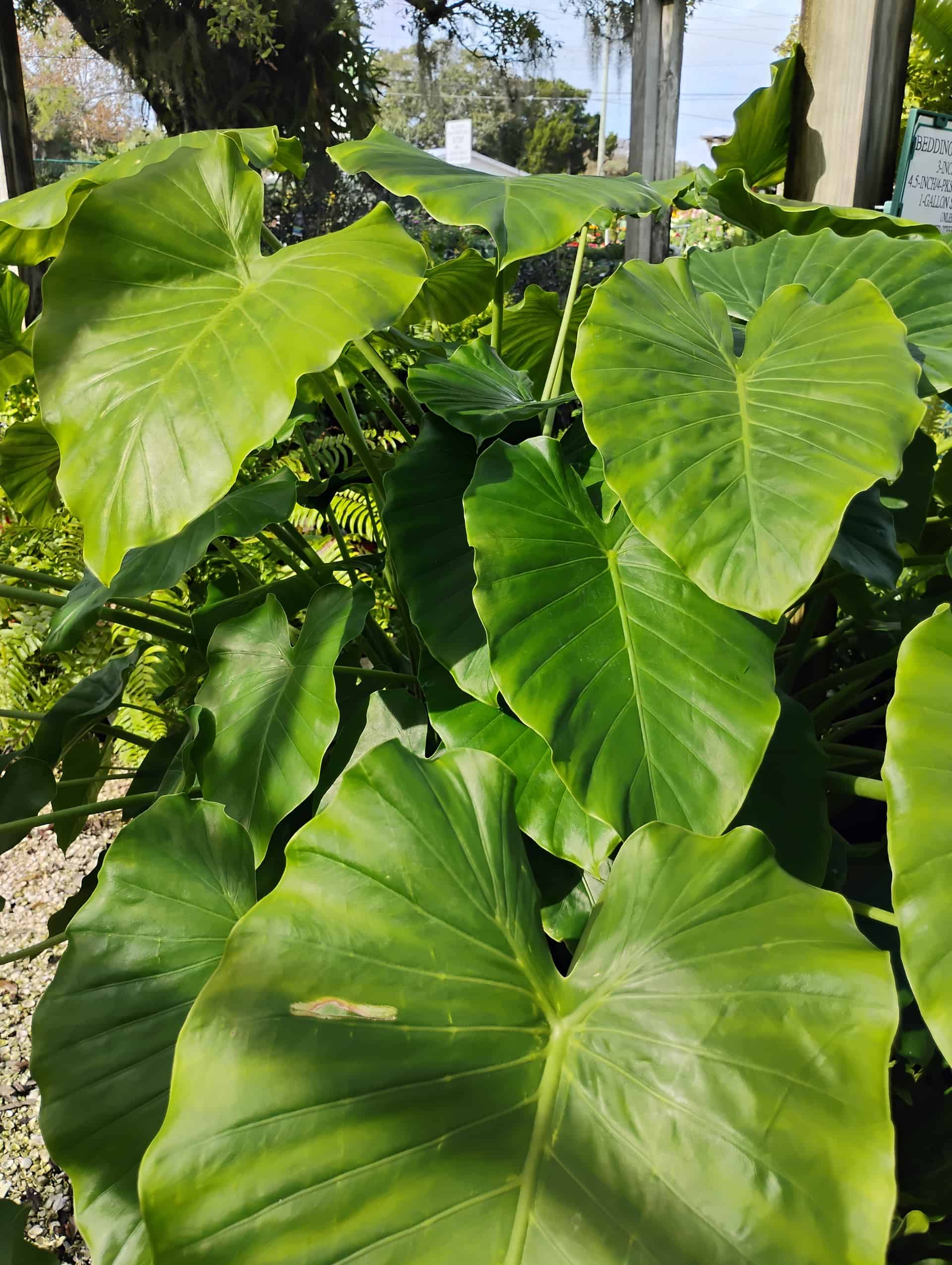 Perennial
Alocasia
Alocasia
Common questions
Is Celestial Lily a good plant for St. Augustine?
Celestial Lily is a perennial for Zone 9b coastal Florida gardens, with low salt tolerance, reaching 1.5-2.5 feet × 1-2 feet.
Care information verified from
Last reviewed February 2026. Our care guidance comes from trusted horticulture sources and decades of helping St. Augustine gardeners. Conditions here can vary dramatically from one area to the next, so come ask us and we'll tailor it to your yard.