
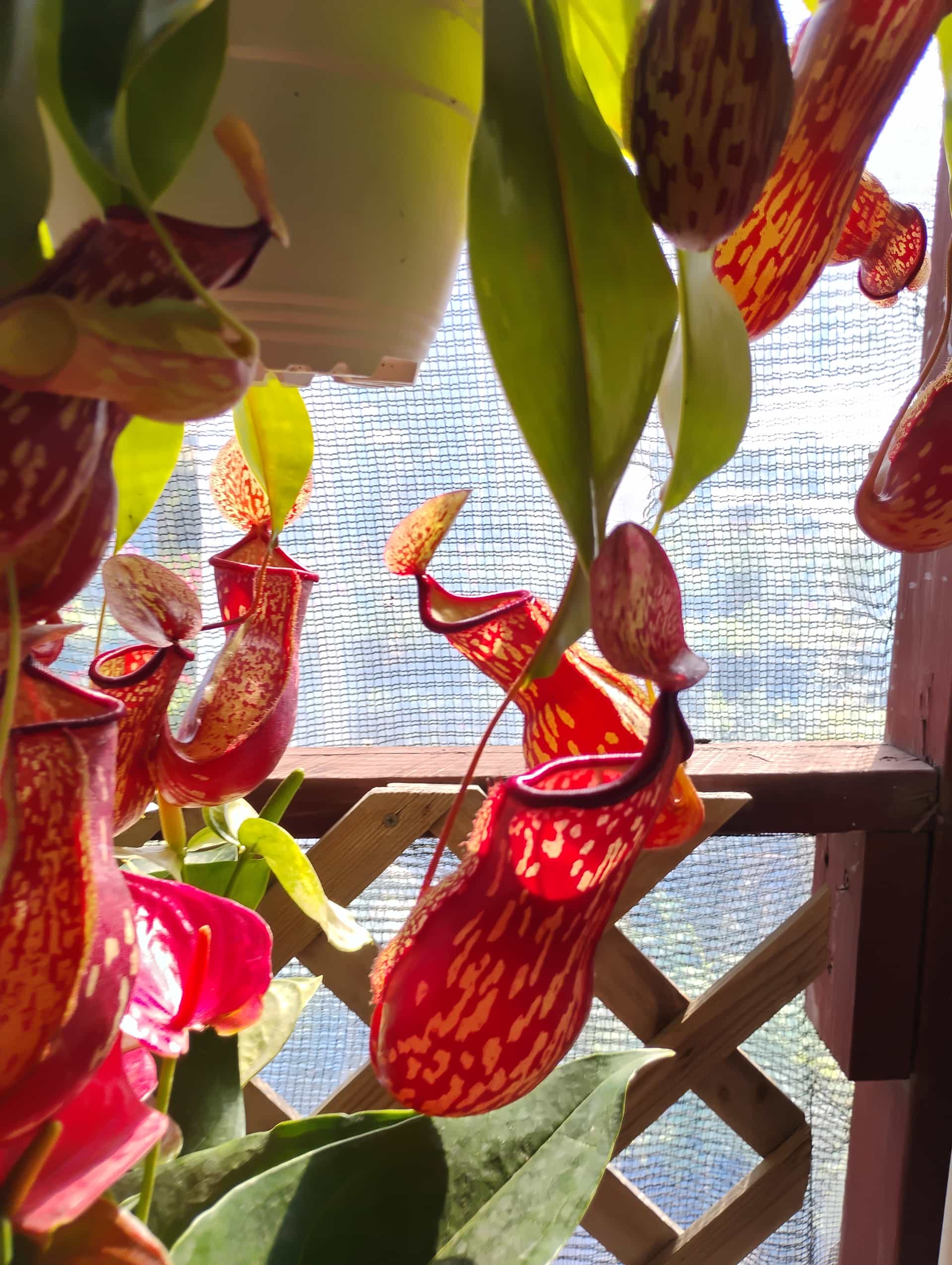
Tropical Pitcher Plant
Nepenthes
Traits
Varieties We Bring In
Last received Jul 19, 2026.
We bring this in seasonally, so what is on the lot changes week to week. A received date shows when it last came in, not that it is here today.
Call (904) 471-0440 to confirm this plant and size before you make the trip.
About Tropical Pitcher Plant
Pitcher Plants (Nepenthes spp.) are tropical carnivorous plants native primarily to Southeast Asia, producing modified leaves that form hanging, fluid-filled pitchers that trap and digest insects and other small animals. The pitchers range dramatically in size, color, and form across hundreds of species, making this one of the most diverse genera of carnivorous plants. Grown as novelty and specialty plants, they are highly prized by collectors and botanical enthusiasts worldwide. Starting at $9.95.
Plant details
- Bloom Season
- Spring, Summer, Fall, Winter
- Flower Color
- Yellow, Red, Multi
- Growth Rate
- Moderate
- Foliage
- Evergreen
- Soil
- Acidic, Well-drained
Best planting months
Seasonal care
Bloom season. Good planting window.
Bloom season. Higher water demand in summer heat.
Bloom season. Ideal planting window.
Bloom season. Retains foliage through winter.
Care essentials
Provide bright, indirect or dappled light — ideally under shade cloth, a lath structure, or a covered patio. Avoid harsh direct midday sun, which scorches pitchers; lowland species thrive with 2–4 hours of gentle morning sun in NE Florida.
Keep the potting mix consistently moist but never waterlogged; always use rainwater or distilled water — Nepenthes are sensitive to tap-water minerals. Maintain high humidity (60–90%); in NE Florida's hot summers, mist regularly or grow in a humid microclimate.
Plant in a nutrient-poor, well-draining mix of sphagnum moss, perlite, and orchid bark (pH 4.0–5.5). Do not fertilize with standard fertilizers; occasional dilute foliar feed (1/4 strength) or insect prey in the pitchers is sufficient. Never use tap water for irrigation.
Similar needs
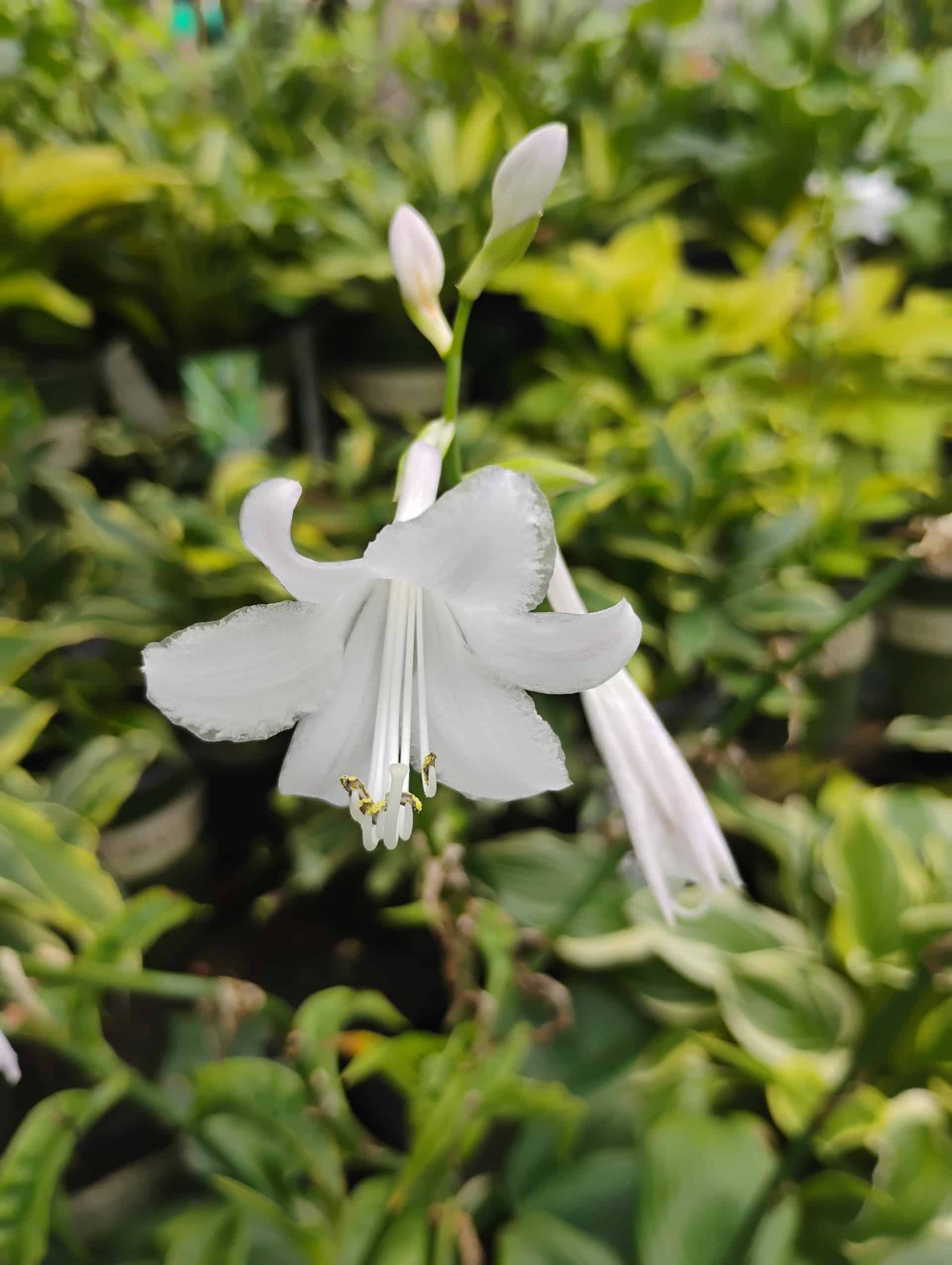
Hosta
Shares 5 of the same needs: shade, high water, acidic, salt tolerance, and zone 9a hardiness.
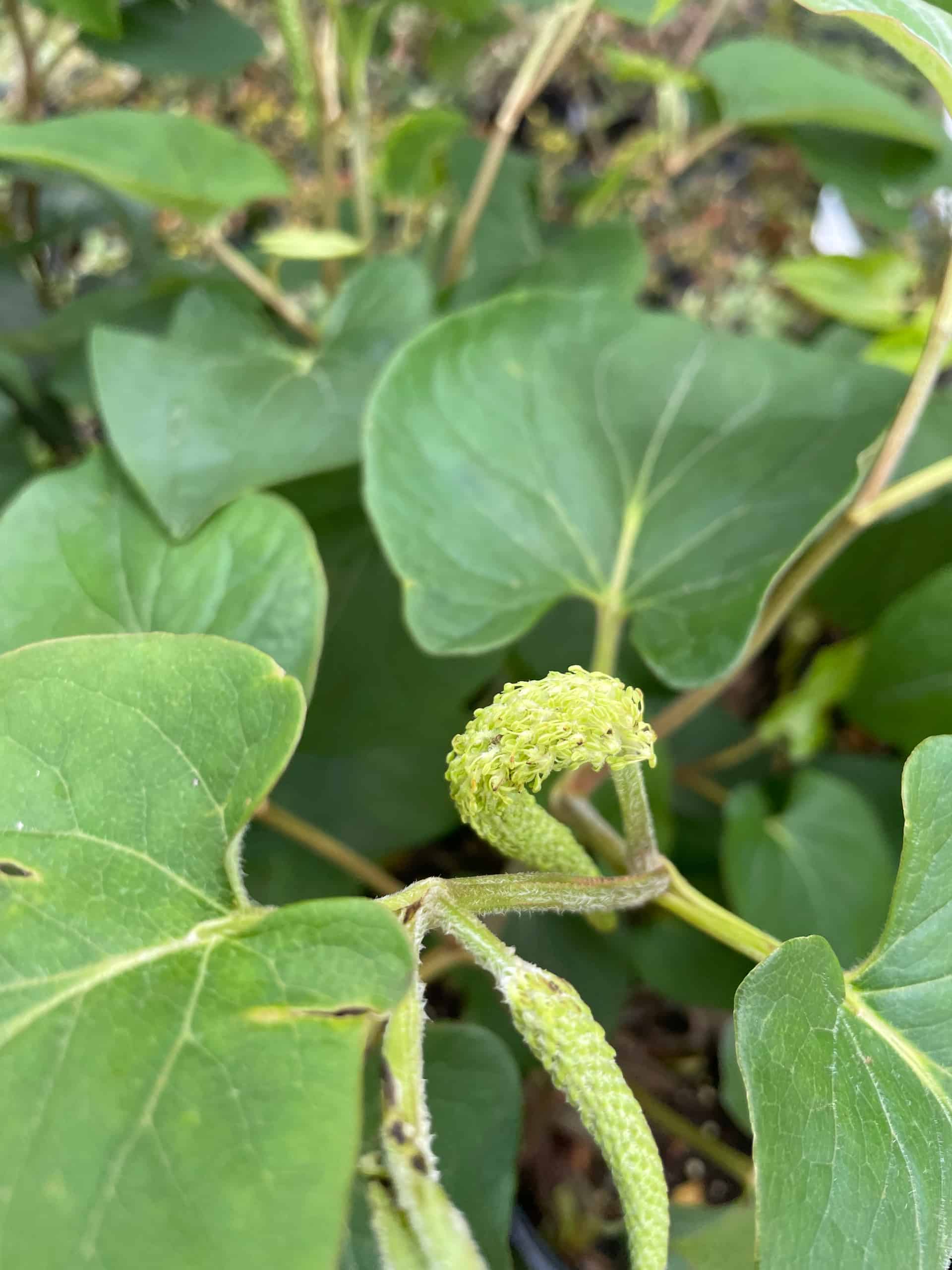
Lizard's Tail
Shares 5 of the same needs: shade, high water, acidic, salt tolerance, and zone 9a hardiness.

Lobster Claw
Shares 5 of the same needs: shade, high water, acidic, salt tolerance, and zone 9a hardiness.
Baby Tears
Shares 5 of the same needs: shade, high water, acidic, salt tolerance, and zone 9a hardiness.
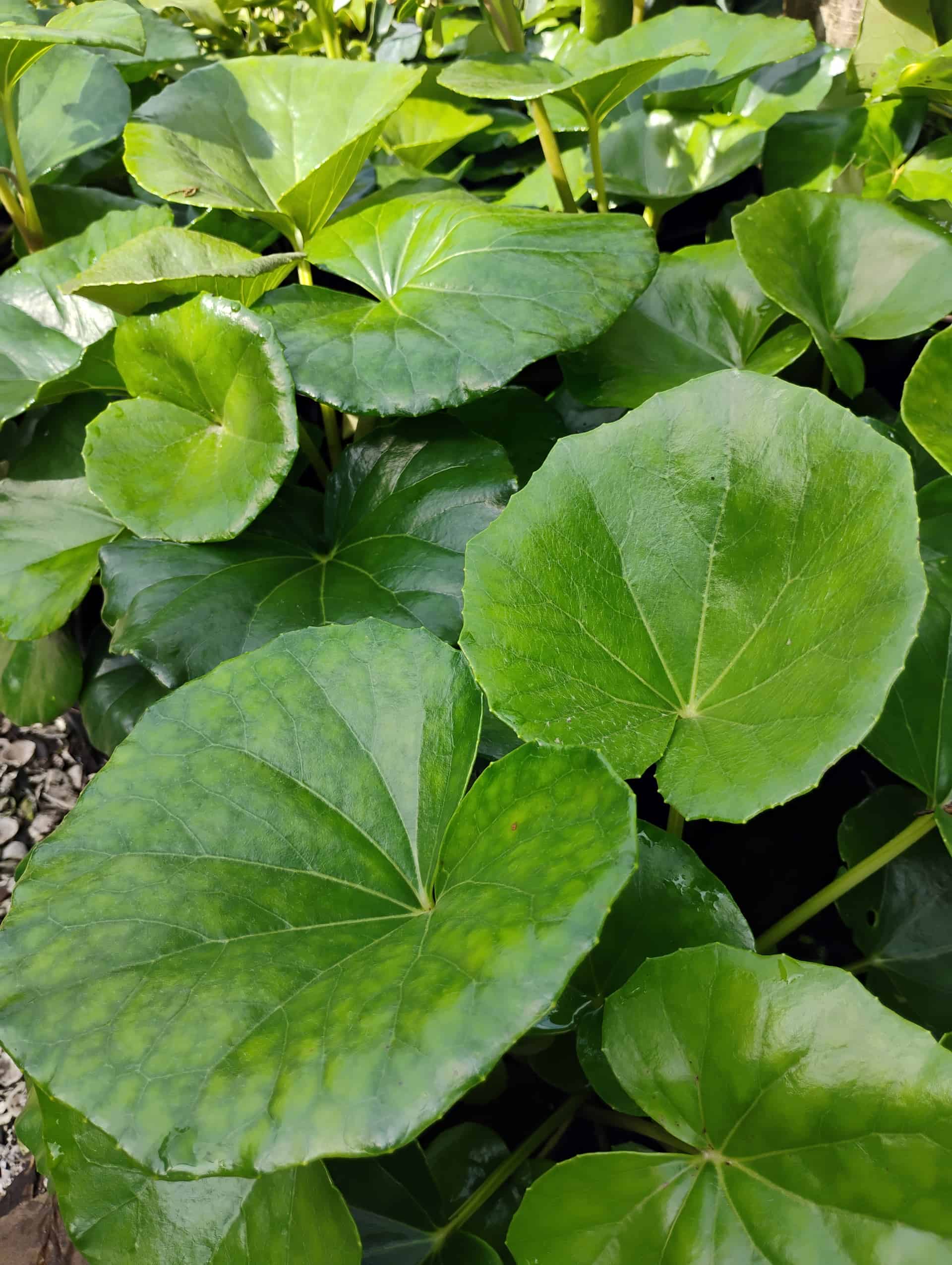
Leopard Plant
Shares 4 of the same needs: high water, acidic, salt tolerance, and zone 9a hardiness.
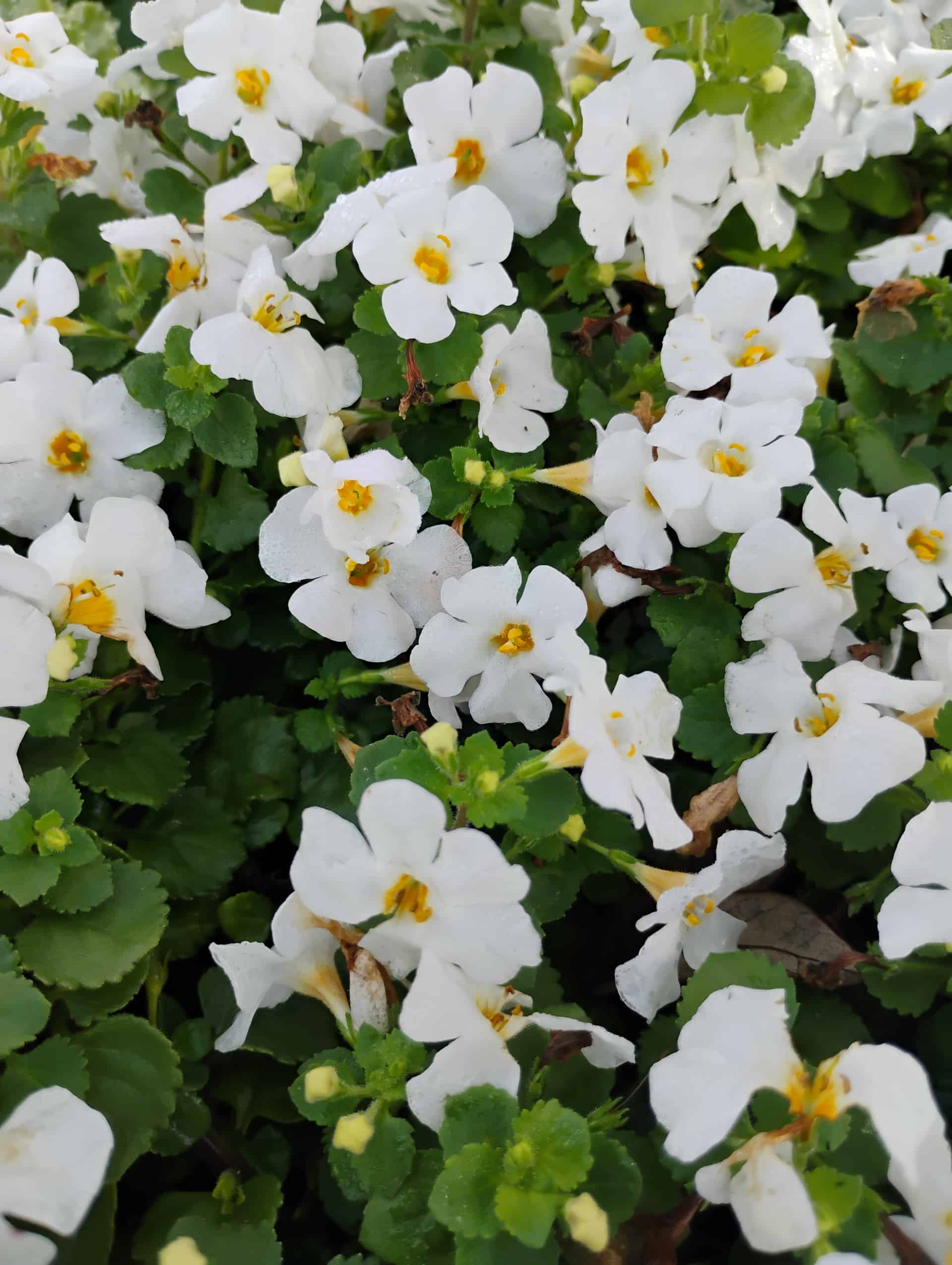
Bacopa
Shares 5 of the same needs: shade, high water, well-drained soil, salt tolerance, and zone 9a hardiness.
You may also like
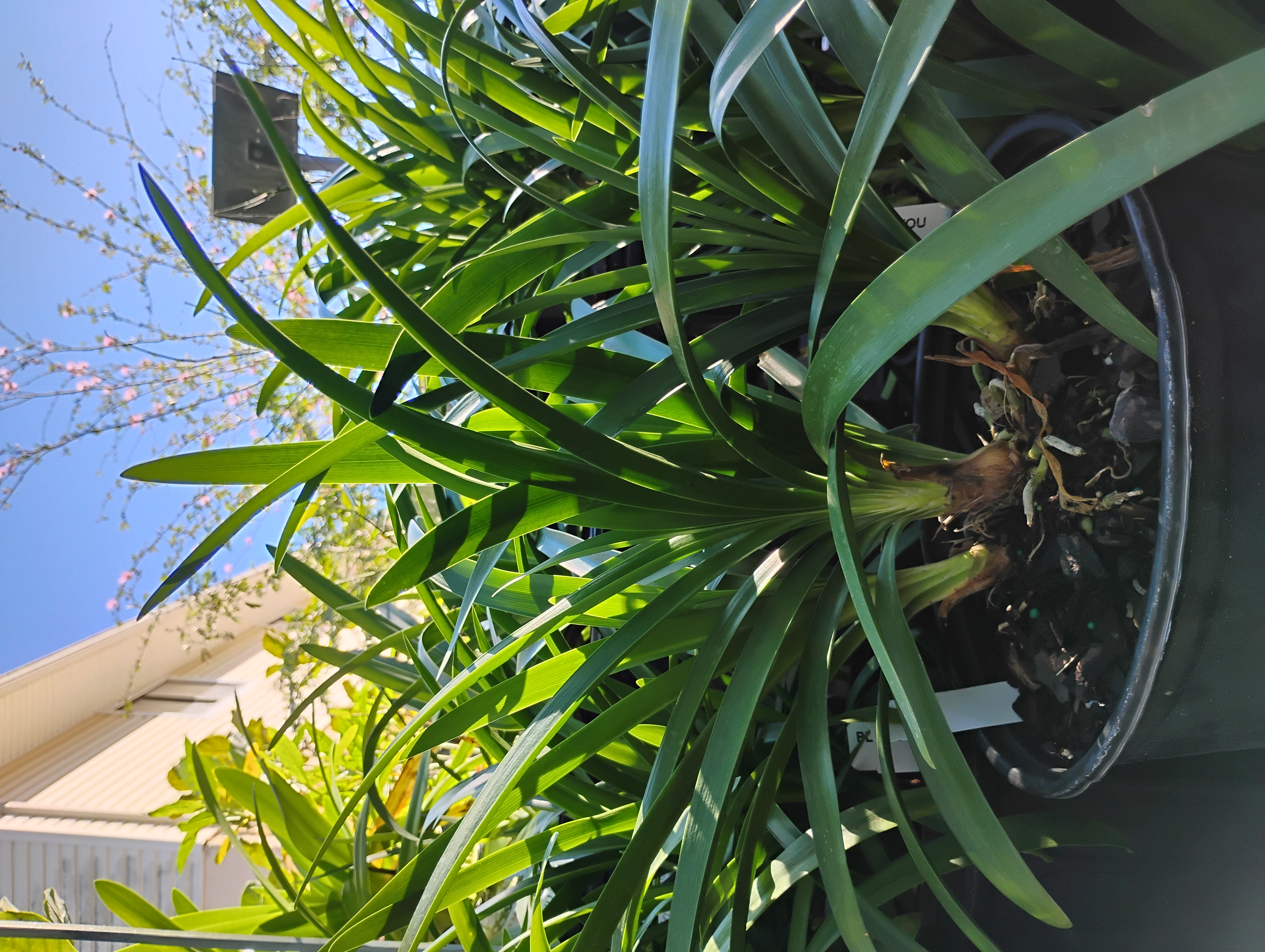 Perennial
Agapanthus
Agapanthus praecox
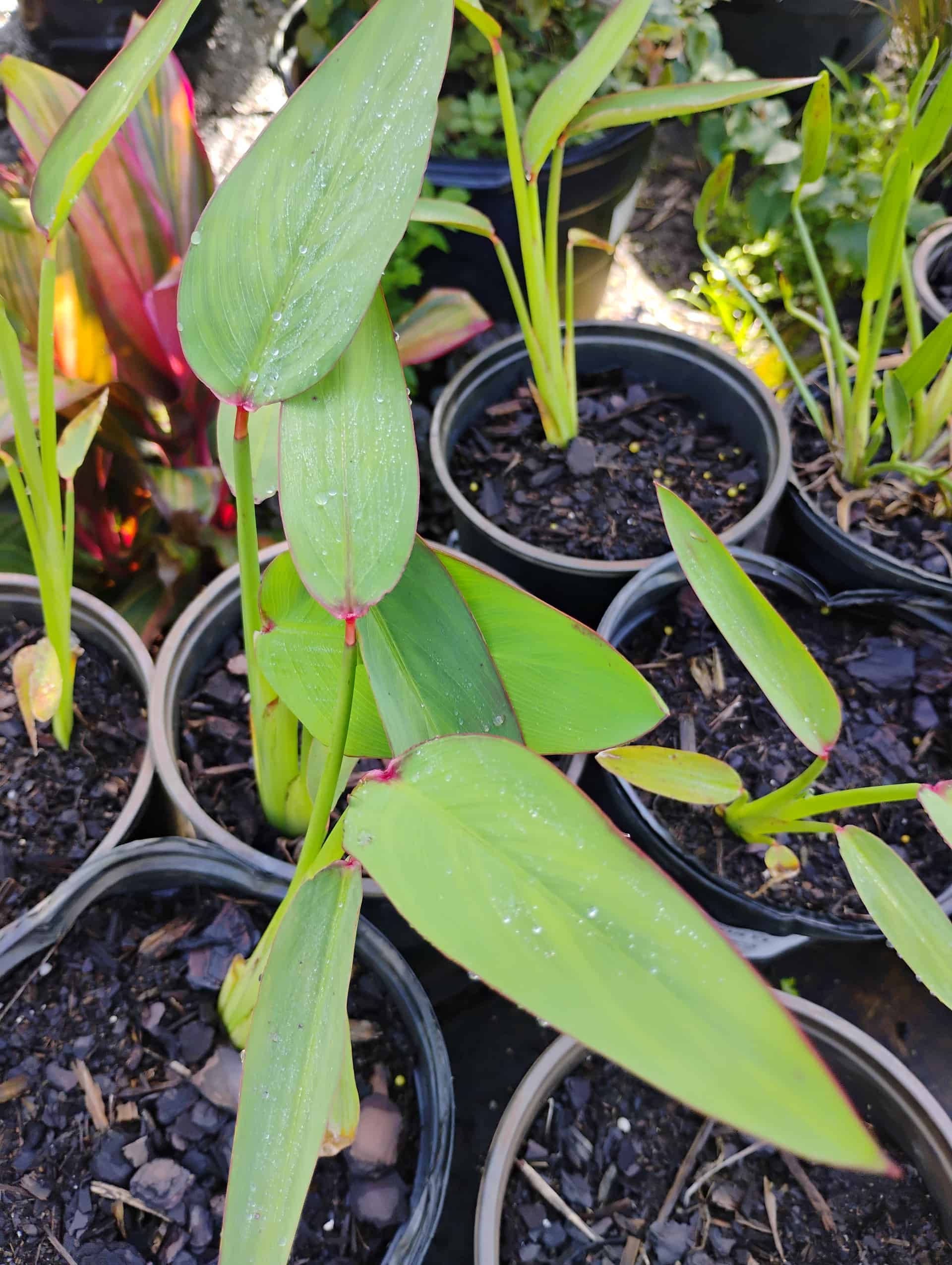 Perennial
Alligator Flag
Thalia geniculata
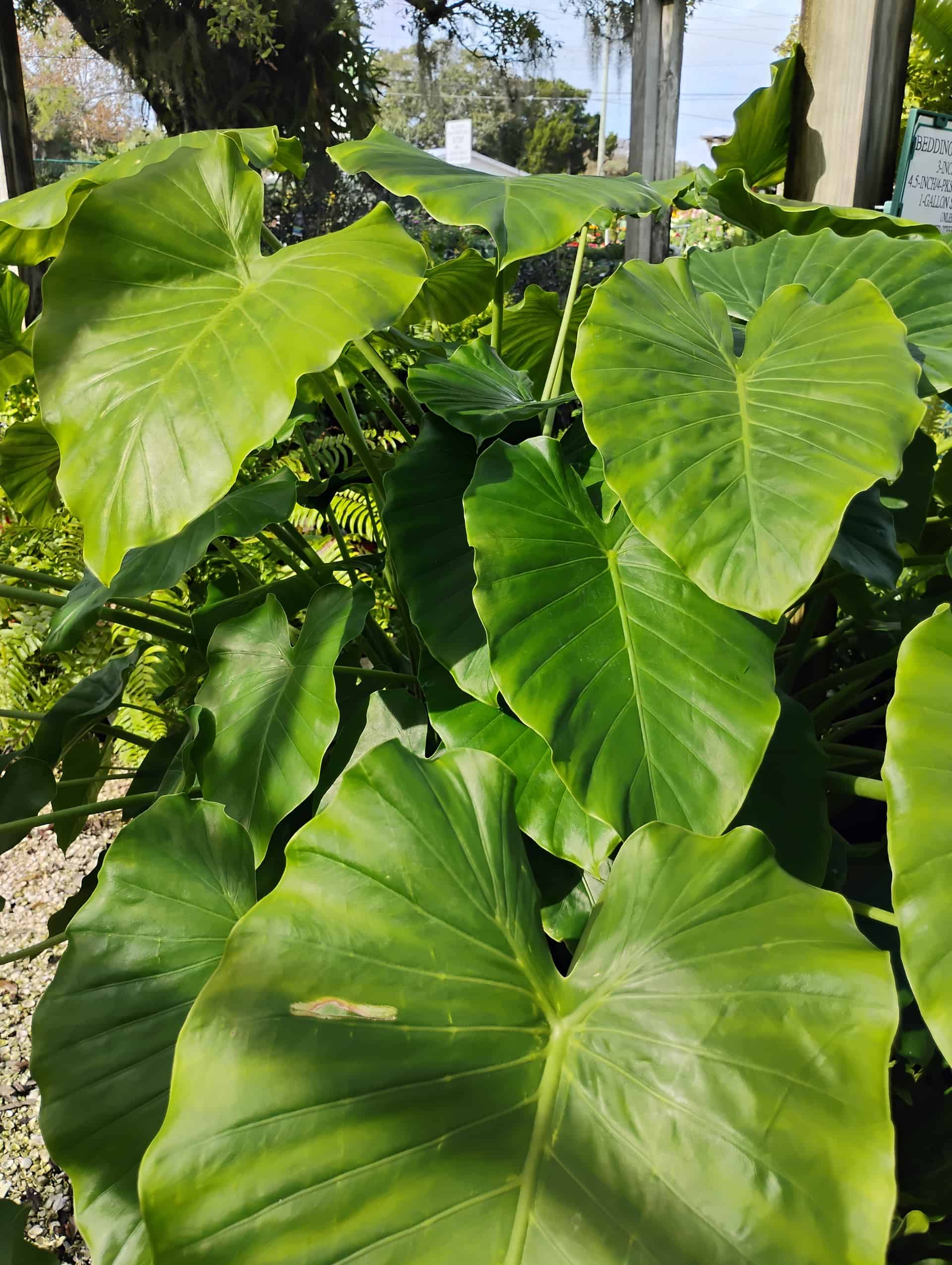 Perennial
Alocasia
Alocasia
Common questions
Is Tropical Pitcher Plant a good plant for St. Augustine?
Tropical Pitcher Plant is a perennial for Zone 9b coastal Florida gardens, with low salt tolerance, reaching 1-3 feet × 1-2 feet (varies significantly by species).
Care information verified from
Last reviewed February 2026. Our care guidance comes from trusted horticulture sources and decades of helping St. Augustine gardeners. Conditions here can vary dramatically from one area to the next, so come ask us and we'll tailor it to your yard.