
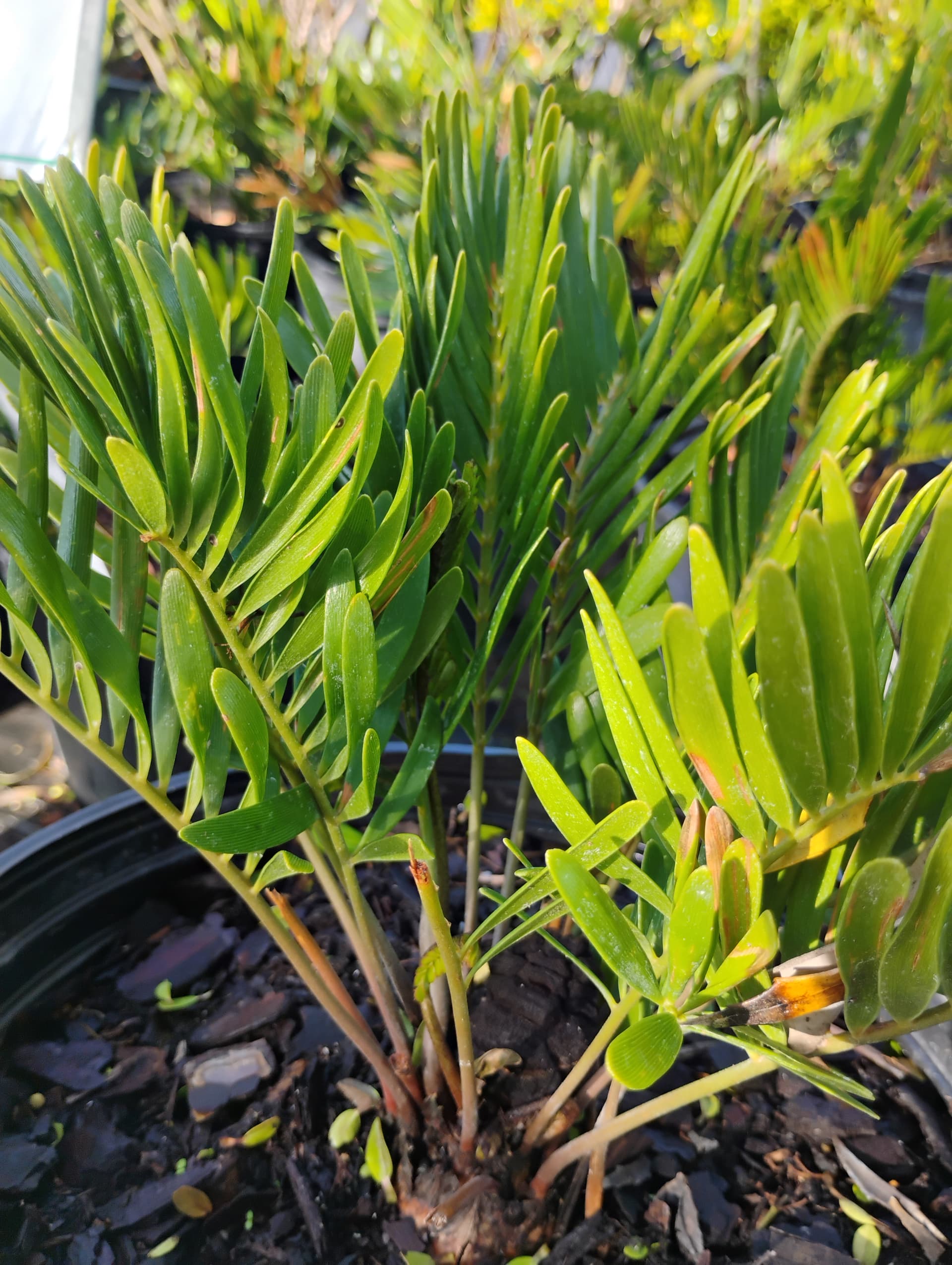
A Plant That Fed Florida
If you want one native plant that captures the deep history of Northeast Florida and still thrives in a sandy, salt-swept St. Augustine yard, it is hard to beat Coontie. This slow-growing, palm-like evergreen has been part of Florida far longer than any garden.
The name comes from the Seminole and Creek word konti, often translated as white root or white bread. Indigenous peoples of Florida, including the Seminole, Timucua, Calusa, and Tequesta, ground the starchy underground stem into flour. Because the raw plant is toxic, this took a careful process of pounding, leaching, and fermenting to wash the poison out before the starch was safe to eat.
Early settlers knew the same starch as Florida arrowroot. Between roughly 1836 and 1925, Coontie supported a real commercial starch industry in South Florida, and the starch was even used for years in the making of animal crackers. Wild plants were harvested faster than this slow grower could recover, populations crashed, and today planting Coontie is a small act of restoring a piece of native Florida.