
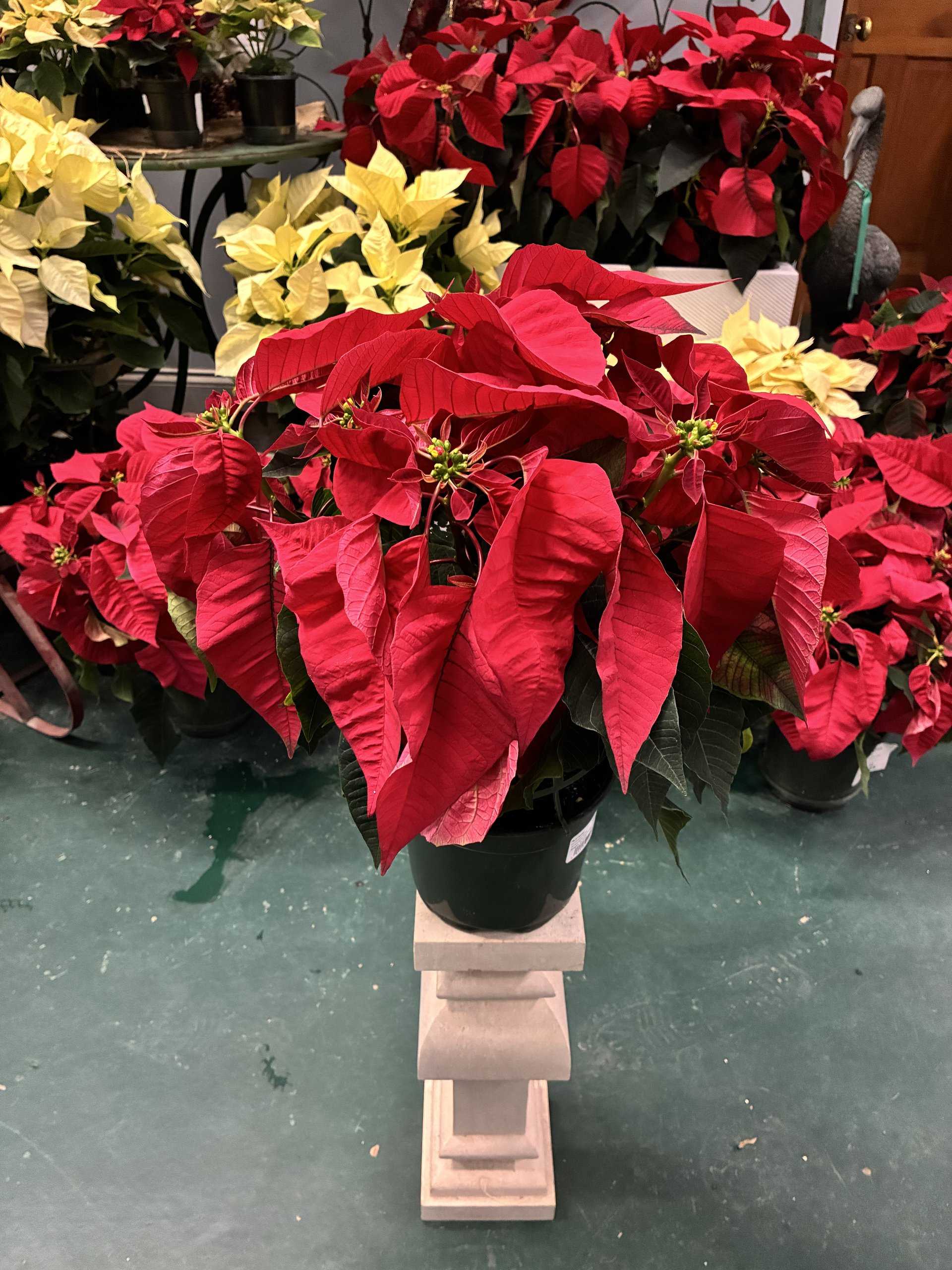
Varieties We Bring In
Pink · White · Red
Pink · White · Red · Princettia Pure White · Norwin Orange · Golden Glo · Marble
Pink · White · Red · Marble
Pink · White · Red · Princettia Pure White · Norwin Orange · Golden Glo · Marble · Autumn Leaves · Superba New Glitter
White, HB · Red, HB · Red/White Mix, HB · Pink, HB · Pink, Deco · White, Deco · Red, Deco
We received some Poinsettia on Nov 17, 2026.
We bring this in seasonally, so what is on the lot changes week to week. A received date shows when it last came in, not that it is here today.
Call (904) 471-0440 to confirm this plant and size before you make the trip.
Last received Nov 17, 2026.
We bring this in seasonally, so what is on the lot changes week to week. A received date shows when it last came in, not that it is here today.
Call (904) 471-0440 to confirm this plant and size before you make the trip.
Pet toxicity: Toxic to dogs, cats, and horses
Pet safety guideAbout Poinsettia
The red, white, pink or marbled parts of a poinsettia are leaves called bracts. Look at their centers to see the tiny flowers. In St. Augustine (zone 9b), enjoy the color indoors over the holidays, then wait until frost danger passes to plant outside.
Plant details
- Bloom Season
- Winter
- Flower Color
- White, Orange, Red, Pink
- Growth Rate
- Moderate
- Foliage
- Semi-evergreen
- Soil
- Sandy, Loam, Well-drained, Acidic
Seasonal care
After the last frost, gradually introduce the plant to outdoor light. Trim the faded bracts before planting.
For a fuller plant, pinch shoots when they reach about 12 inches. Leave four leaves on each shoot.
Finish pinching by September 10. From October, keep the plant away from porch lights and lit windows at night so flower buds can form.
Keep pots away from cold drafts and protect them from freezes. The milky sap can irritate skin. Keep poinsettias out of reach of pets. Chewing the plant can irritate the mouth and stomach and sometimes causes vomiting.
Care essentials
Give the pot bright, indirect light indoors. In the garden, choose a spot with sun for most of the day.
Feel the soil surface before watering. When it feels dry, water the pot and empty any water that collects in the sleeve or saucer.
Skip fertilizer during the indoor display. Outdoors, choose moist soil that drains well. In North Florida, feed monthly from May through September. Follow the label and choose a low-phosphorus fertilizer with similar amounts of nitrogen and potassium.
Common questions
Is Poinsettia a good plant for St. Augustine?
Poinsettia is a seasonal. Mature size: 1-2 feet (4-10 feet outdoors) × 1-2 feet. Light: Full Sun, Part Sun. Water needs: Moderate.
What is the recorded pet toxicity for Poinsettia?
Toxic to dogs, cats, and horses
Care information verified from
Last reviewed November 2026. Our care guidance comes from trusted horticulture sources and decades of helping St. Augustine gardeners. Conditions here can vary dramatically from one area to the next, so come ask us and we'll tailor it to your yard.